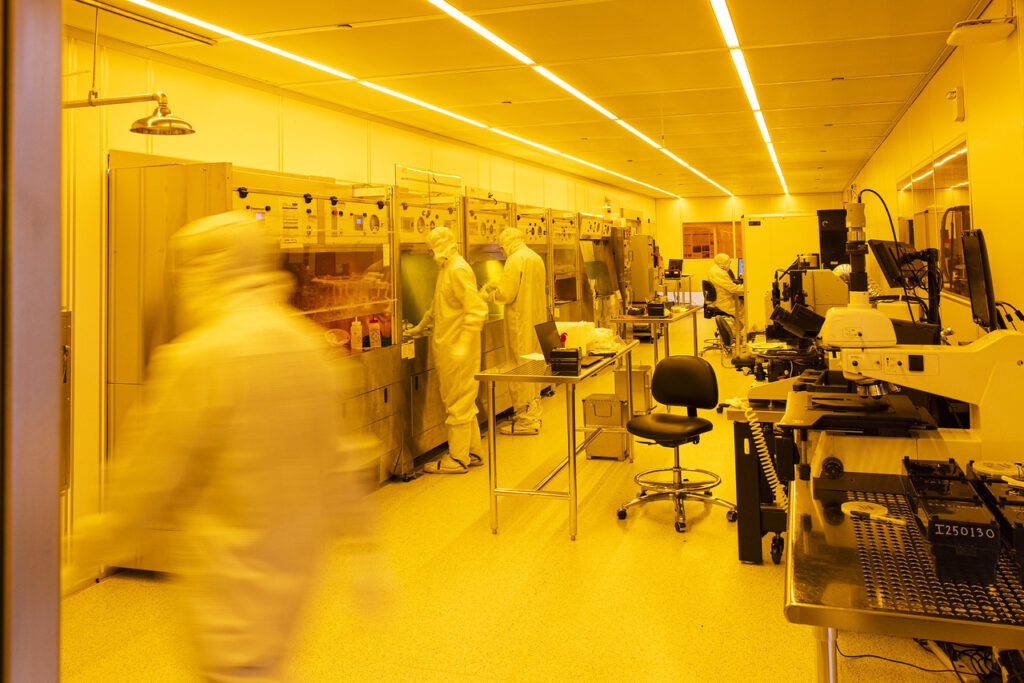
June 29, 2026 — The University of Washington’s University Partnership for Workforce Advancement and Research & Development in Semiconductors (UPWARDS) is excited to offer UW students an opportunity to gain hands-on experience in semiconductor manufacturing and nanofabrication technologies.
Hosted by Washington Nanofabrication Facility (WNF), this one-week summer camp is designed to introduce undergraduate students to the foundational tools, techniques, and processes used in semiconductor research and fabrication. The camp will be held July 28 – August 1, from 10 a.m.– 4 p.m.
Applications are now closed due to the high volume of responses received.
June 25, 2026 — A University of Washington course is using virtual reality modules to trainstudents for in-demand semiconductor jobs.Electrical & Computer Engineering Associate Teaching Professor Tai-Chang Chen adopted the Cornell NanoScale Facility (CNF) Virtual Reality (VR) educational platform for his Devices and Circuits 1 (EE 331) course this spring to offer students the job skills needed to fill the growing semiconductor technical workforce gap.
Semiconductor chips control electricity in just about every piece of modern technology. And since they are even smaller than microscopic airborne particles that can cause device failures, their production requires a controlled environment that only a cleanroom can provide.
Based on projections from the Semiconductor Industry Association, 67,000 semiconductor jobs in the United States will be unfilled by 2030 — that’s 58% of roles spanning across manufacturing and design. The CNF VR educational models make it possible to scale cleanroom training and support workforce development goals by reaching significantly more learners.
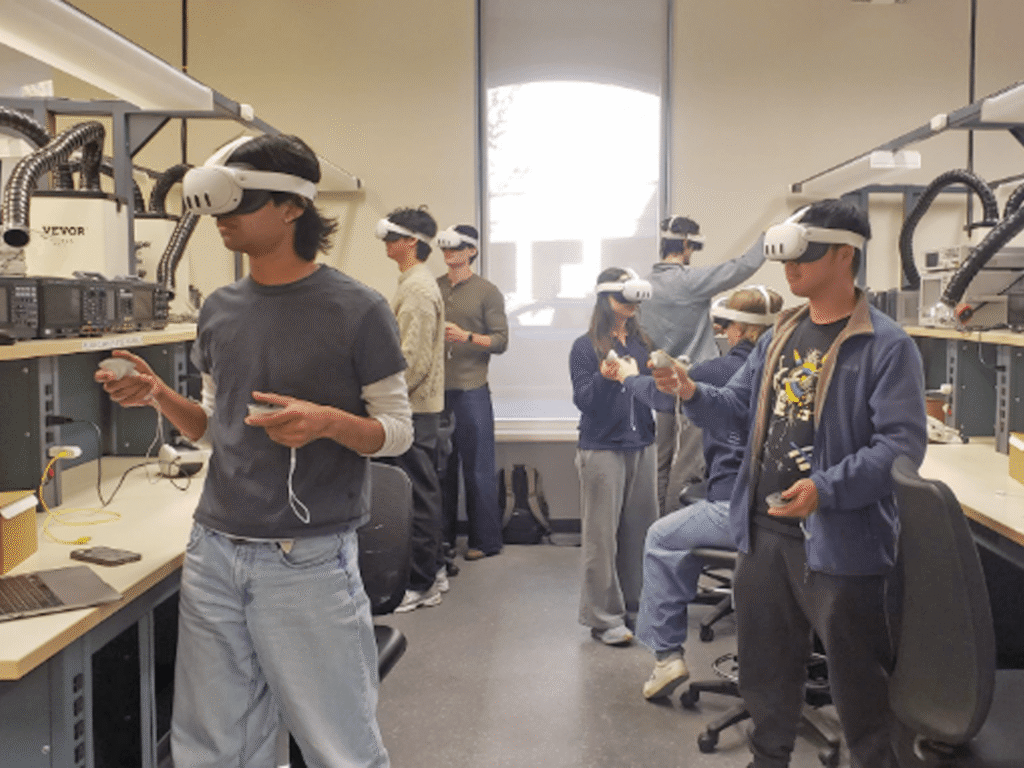
Students in EE331 are immersed in the cleanroom-user experience, which includes simulated face-to-face interactions with CNF equipment and staff. The course was equipped with eight Meta Quest 3 headsets (one per student, per lab section), along with licensed access to CNF’s library of immersive cleanroom modules, including:
Students engage with the content collaboratively in the EE 331 lab space, exploring cleanroom environments and processing tools that would otherwise be inaccessible at this scale. (Photo: UW UPWARDS)
“Incorporating CNF VR educational modules in the classroom offers UW students a unique edge in developing in-demand skills in the microelectronic and nanotechnology fields,” said Chen. “This opportunity highlights UW’s commitment to innovation, along with its role in strengthening the semiconductor industry as an UPWARDS for the Future Network partner.”
UW’s on-campus cleanroom is housed within the Washington Nanofabrication Facility (WNF) in Fluke Hall. WNF Acting Director Darick Baker worked with CNF and UPWARDS to enroll UW in the beta-test deployment and prepared the headsets for students.
With a potential shortage in a skilled cleanroom workforce in the next five to ten years, “many additional cleanroom workers are needed, but very few students are familiar with what semiconductor manufacturing requires,” noted Baker. “The CNF VR educational modules allow WNF and UW to introduce more students to the cleanroom environment,” noted Baker.
Students complete the modules in VR prior to their hands-on lab sessions, allowing them to enter the WNF better prepared and able to make more productive use of limited lab time. Early observations suggest that the VR platform meaningfully extends the reach of experiential learning in the EE331 course.
“Immersive VR content empowers students,” said Chen. “These innovative modules enhance the lab experience and provide students with both exposure and confidence to master cleanroom protocols — and ultimately contribute to filling the needs that come with the rapid growth of the semiconductor field.”
Additionally, Chen is exploring further integration through a planned UW–Japan study-abroad fabrication course developed in partnership with member institutions of the UPWARDS for the Future Network.
In 2023, Micron and Tokyo Electron Limited (TEL) launched the UPWARDS for the Future Network alongside university partners. This partnership cultivates a more diverse, robust and highly skilled talent pipeline for the semiconductor workforce — and drives emerging research while increasing the pipeline of students studying a semiconductor curriculum.
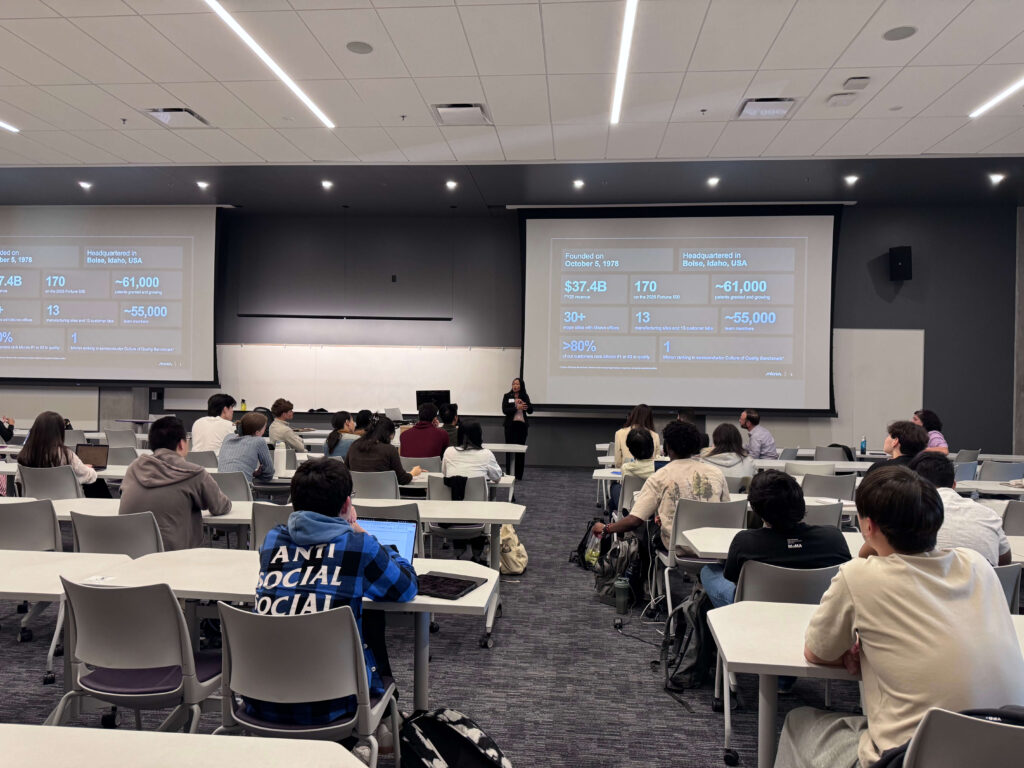
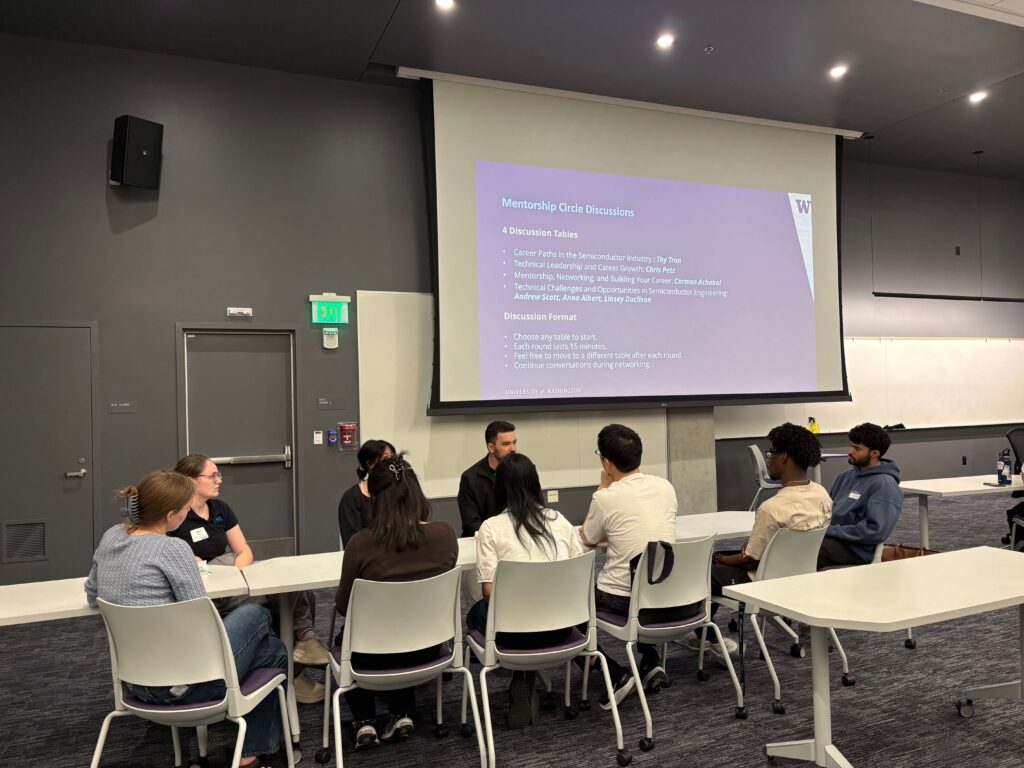
On June 4, University of Washington UPWARDS hosted a semiconductor mentorship and networking event designed to help UW students build professional networks, gain a better understanding of the semiconductor industry, and develop a clearer vision for their own future careers.
“The rapid growth of artificial intelligence, data centers, and advanced computing has increased both the demand for semiconductor technologies and student interest in the field,” said Jungwon Choi, Electrical & Computer Engineering assistant professor.
Hosted in collaboration with UPWARDS for the Future Network industry partners —Micron and Tokyo Electron Ltd. (TEL) — the event centered on small-group roundtable discussions, offering students unique access to candid conversations with semiconductor experts about career paths, technical challenges, leadership and professional advancement.
“One of the most meaningful aspects of this event was seeing students engage directly with professionals from a wide range of roles, including engineers, engineering leaders, university engagement professionals and executives,” noted Choi.
The next UW UPWARDS mentoring and networking event will be held this fall and open to all UW students. Stay tuned for more details.
Join us for a unique UW UPWARDS opportunity featuring engineers and industry leaders from Micron Technology and TEL. Engage in meaningful conversations, foster connections and gain real-world perspectives from industry experts!
During small-group rotations, students will gain insights on building leadership skills in technical fields; diverse engineering career paths; and navigating career paths.
4–6 p.m. | Interdisciplinary Engineering Building (IEB) | Room G10
In August 2025, the University of Washington (UW) hosted the U.S.-Japan University Partnership for Workforce Advancement and Research & Development in Semiconductors (UPWARDS) for the Future Summer Intensive. The UW, five other U.S. universities, and six Japanese universities are sponsored by the National Science Foundation, Micron, and Tokyo Electron (TEL) to lead UPWARDS with the mission of developing semiconductor talent and expanding cutting-edge research. The Summer Intensive at UW is an immersive educational experience designed to prepare the next generation of semiconductor leaders.
Semiconductor devices are a critical component of the many electronics that power our daily lives. The technological innovations that have driven their widespread success have relied on manufacturing smaller and smaller integrated circuits to build more powerful devices. The next generation of integrated circuit development will require features smaller than 10 nanometers, something that is not currently possible in today’s commercial manufacturing landscape.
Following support from a UW Molecular Engineering & Sciences Institute (MolES) pilot award, UW professors David Bergsman and Aniruddh Vashisth have received a National Science Foundation Future Manufacturing award for a project that aims to address the 10 nanometer challenge in the field of semiconductor manufacturing.
We live in a world powered by electricity. But few people stop to think about where that power comes from, let alone how it is transformed to run the devices they use every day. Electrical energy can be generated from fossil fuels or renewable sources, such as the sun, wind, and flowing water. But we cannot plug this raw power directly into electronics. It must first be processed and optimized for specific systems and devices. This is the role of power electronics, a branch of electrical engineering focused on transforming electrical energy from one form to another. A good example of power electronics in everyday life are the power adapters used to charge smartphones and laptops. Each power adapter contains a small power converter that changes alternating electrical current from a wall outlet into a form the device can use.
Wednesday, July 23, 8 p.m. EST, 5 p.m. PST over Zoom. Register here to join the conversation.
Guest speakers Dr. Cindy Yi from Virginia Tech and Dr. Jungwon Choi from UW will speak on their graduate school experience and careers. Attendees will then be given the opportunity to network with students in other universities both in the U.S. and Japan.
Participating universities include Boise State University, Purdue University, Rensselaer Polytechnic Institute, Rochester Institute of Technology, University of Washington and Virginia Tech in the U.S. In Japan, universities include Hiroshima University, Institute of Science Tokyo, Kyushu University, Nagoya University and Tohoku University.
Send inquiries to Sanae Akaba at sanae.adaba@ila.isct.ac.jp
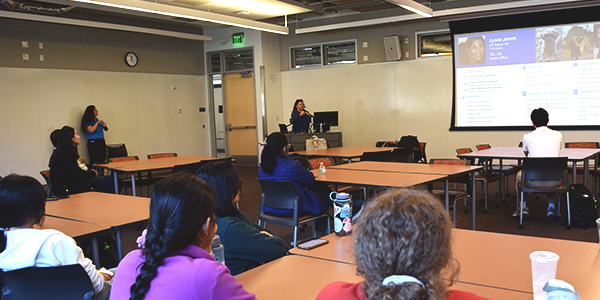
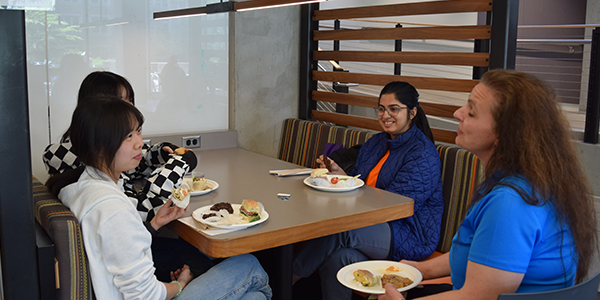
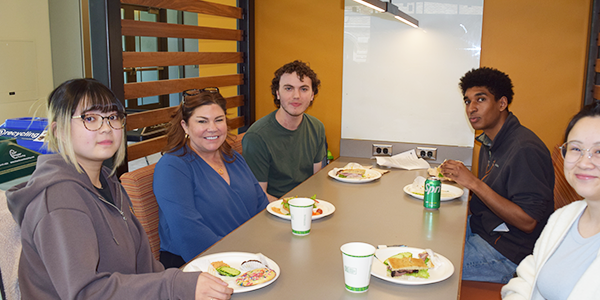
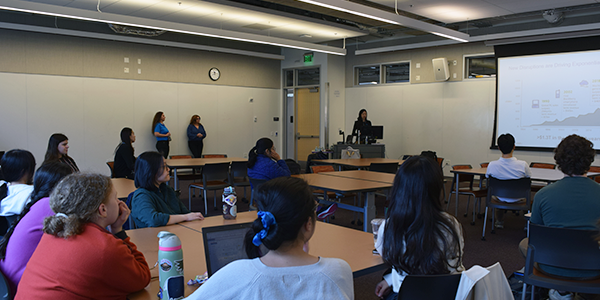
On May 8, 2025, the UPWARDS for the Future Network, in collaboration with Micron and Tokyo Electron (TEL), hosted a “Career Chat: Women in Engineering” event at the University of Washington’s Nanoengineering & Sciences Building. The event featured three distinguished speakers from TEL: Lynda Jarrett (VP of IT), Raney Terrizzi (Sr. Manager of Technology), and Melissa Chan (Manager of Process Engineering). Each speaker shared their personal journey as a woman in engineering, focusing particularly on experiences within the semiconductor industry. They discussed challenges they faced, lessons learned, and the paths that led them to their current leadership roles. The event concluded with a networking session, providing students and attendees the opportunity to connect with the speakers and other professionals passionate about semiconductor engineering.
The University of Washington is at the forefront of an international effort to innovate the semiconductor industry while building a skilled U.S.-based workforce to design and manufacture chip technology.